
Arrest Records in Davis County
Arrest records in Davis County are made by law enforcement, not the courts. The Davis County Sheriff's Office books people into the Davis County Correctional Facility, and city police agencies such as Layton, Bountiful, and Clearfield make their own arrests too. The arrest record captures the booking: who was arrested, when, by which agency, and on what charges. The Sheriff posts a public inmate roster that updates every 15 minutes.
An arrest record is the start, not the whole story. Once a prosecutor files charges, a criminal court record opens, and that file tracks pleas, hearings, and the outcome. The two records live in different systems. For the full court file, see the Davis County court records page. This page leads with the arrest side: booking, the roster, mugshot rules, and how to clear a record.
How to Search Davis County Arrest Records
The fastest public tool for a recent arrest is the Davis County Sheriff's inmate roster. It has one name box and a details link that shows charges and bonds. For arrests that led to charges, Utah Courts Xchange shows the criminal case. For a statewide check, the Utah Bureau of Criminal Identification handles criminal history.
- Open the Davis County Sheriff's inmate roster and type a last name.
- Open the person's detail to see booking date, age, agency, charges, and bonds.
- If charges were filed, search the name on Xchange for the court case.
- For a formal record, request a criminal history through the state BCI.
The roster is marked informational only. It is good for a quick check, but it is not a certified record and should not be used for news reports or legal filings. The Davis County inmate records page walks through the roster field by field.
What a Davis County Arrest Record Shows
The Sheriff's roster detail is the core arrest record the public can see. It pulls from the booking and updates every 15 minutes. The fields below come from a sample Davis County inmate detail, and they tell you what to expect when you open a person's record.
| Field | What It Shows |
|---|---|
| Name Number | The numeric ID the jail assigns to the person. |
| Booked | The date and time of booking into the jail. |
| Age / Gender | Basic descriptors shown on the detail page. |
| Arresting Agency | The police agency that made the arrest, such as a city police department. |
| Charges | A table of charge number, description, state statute, counts, and disposition. |
| Bonds | Bond type and amount, with the charges each bond applies to. |
No booking photo appears. The page notes that photos are protected and are not posted. For the full roster walkthrough, see the inmate records page.
Arrest Records vs. Criminal Court Records
An arrest record and a court record are not the same. The arrest record is made at booking by the Sheriff or police. The court record opens later, when a prosecutor files charges. One can exist without the other. A person may be booked and released with no charges, or charged by summons with no booking at all.
| Arrest Record | Criminal Court Record | |
|---|---|---|
| Source | Sheriff / Police | Court Clerk |
| Created When | Booking | Charges filed |
| Contents | Booking info, charges, bonds | Pleadings, motions, disposition |
Charges vs. Convictions
Being charged is not the same as being convicted. A charge is an accusation that rests on probable cause. A conviction comes only after a guilty plea or a verdict, under the much higher standard of proof beyond a reasonable doubt. An arrest record showing a charge says nothing final about guilt.
| Charge | Conviction | |
|---|---|---|
| Stage | Accusation | Verdict or plea |
| Burden of Proof | Probable cause | Beyond reasonable doubt |
| Public Record | Yes, unless restricted | Yes, unless expunged |
Read the disposition before drawing any conclusion. A case may end in a dismissal, an acquittal, a plea in abeyance, or a conviction. The disposition, not the charge, is the result.
Mugshots and Booking Photos in Davis County
Davis County does not post mugshots online. The inmate detail page says that under Utah Code § 17-22-30, inmate photos can no longer be provided on the website, and booking photos are protected records under GRAMA. This is a deliberate limit, not a glitch. The roster shows the name, age, gender, agency, and charges, but not a photo.
That rule cuts against the mugshot websites that charge to remove a photo. Because the county does not release booking photos, those sites cannot pull them from the official roster. If you want to confirm a booking, the Sheriff's roster is the source, and a call to Corrections confirms current custody.
The Davis County Attorney's Role
An arrest sends a case to a prosecutor, and in Davis County that is the County Attorney. Troy Rawlings serves as Davis County Attorney. The office prosecutes felony crimes across the county and class A misdemeanors for cities other than Bountiful, Woods Cross, and Layton, which handle their own class A cases. It also prosecutes misdemeanors in the unincorporated county.
The Davis County Attorney's office also runs victim services and the county's specialty courts, such as Drug Court and Mental Health Court.
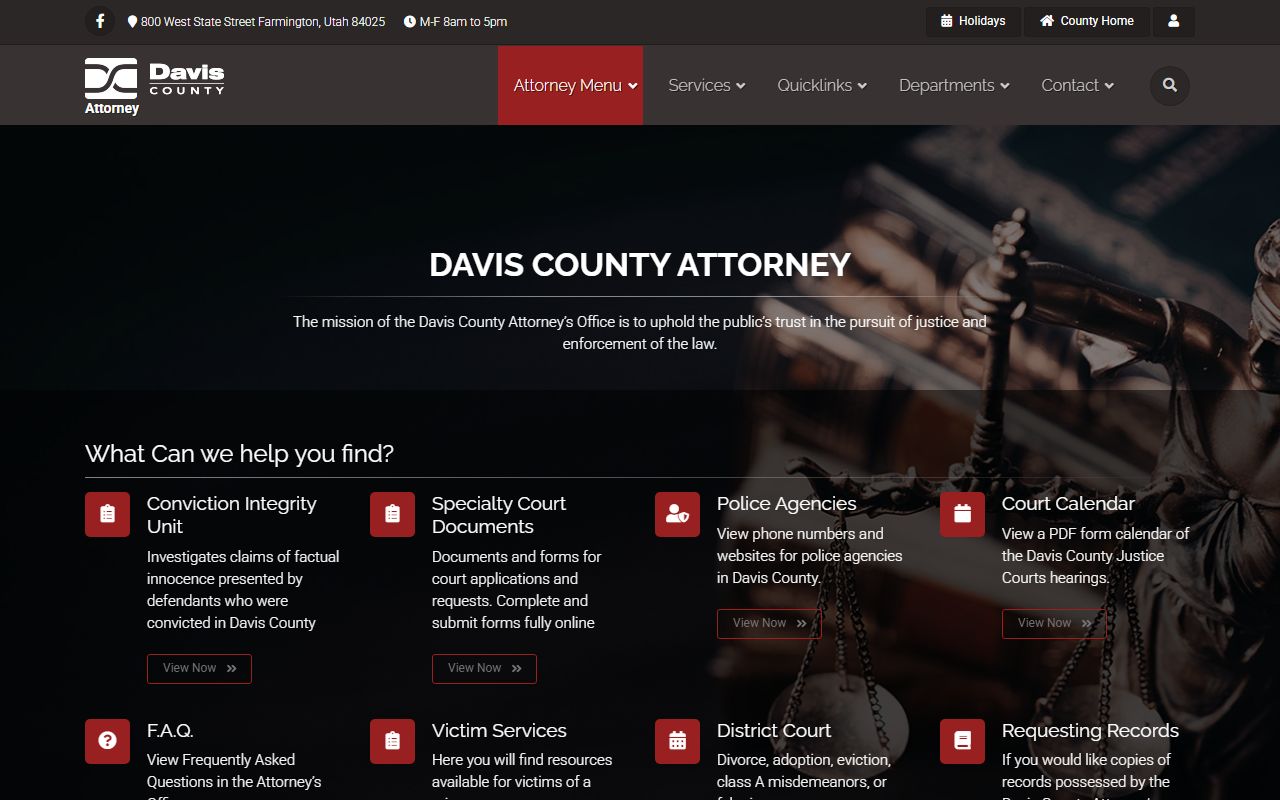
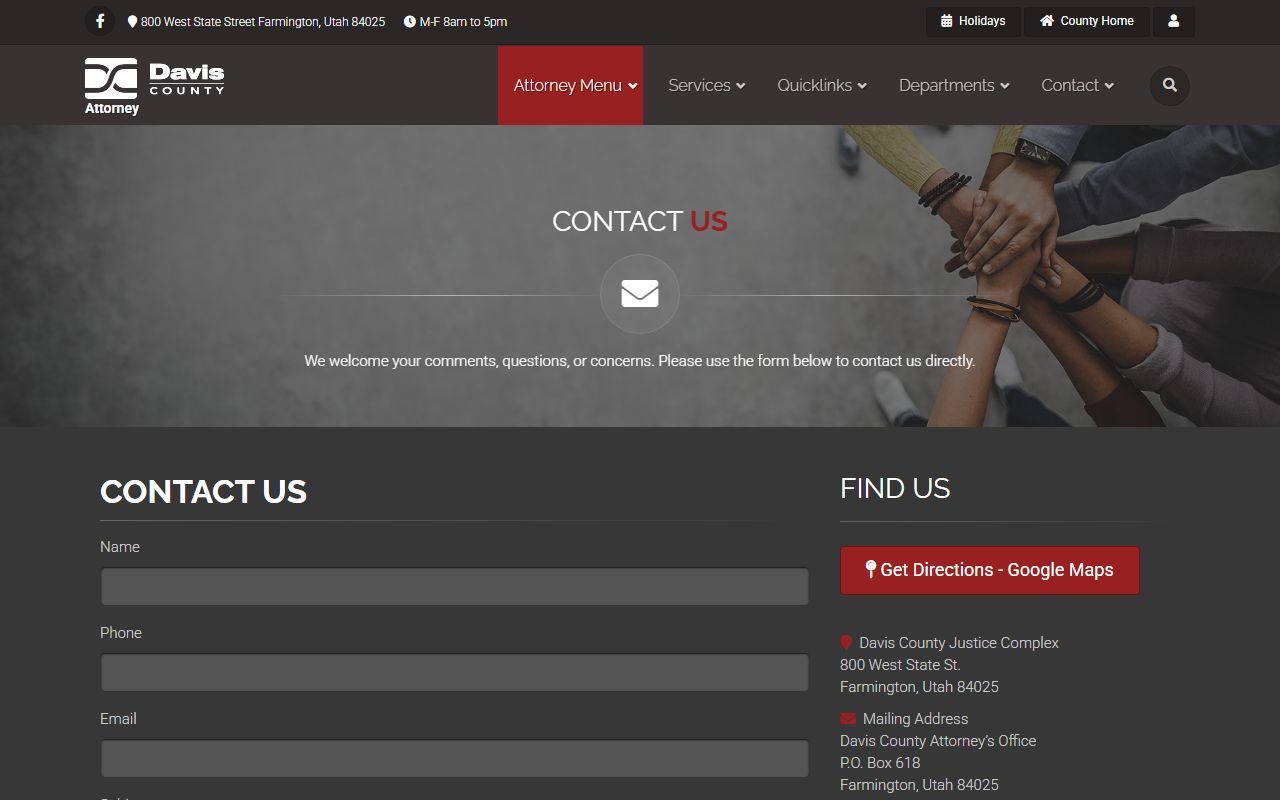
For police-agency questions tied to an arrest, the office lists local contacts. The County Attorney contact page names the office and the agencies it works with.
Statewide Criminal Records Search
A single jail roster does not show a person's full record. For a complete criminal history, the Utah Bureau of Criminal Identification, part of the Department of Public Safety, is the state source. How that history is shared is set by law. Utah Code § 53-10-108 spells out the rules and limits on sharing criminal history information.
The official text of Utah Code § 53-10-108 explains who may receive criminal history and for what purpose.
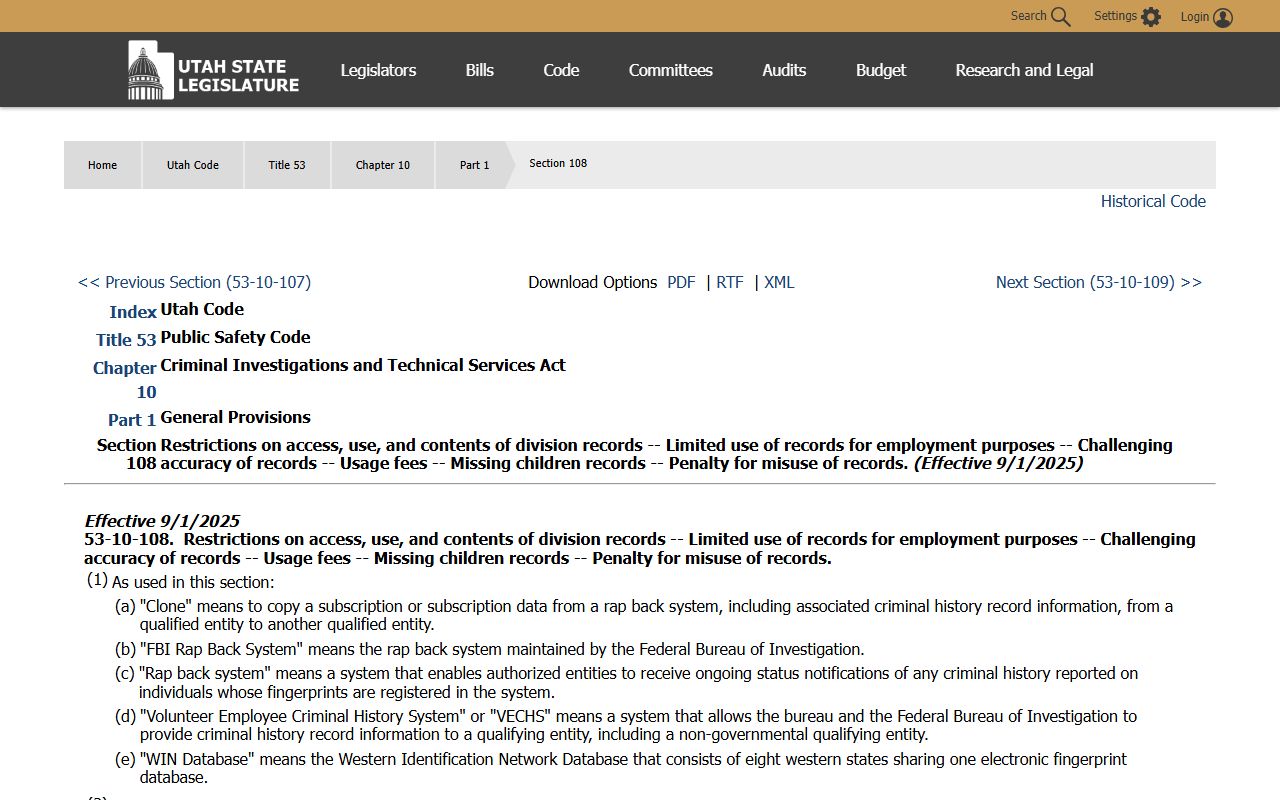
A formal background check follows different rules than a casual roster lookup. Employers and landlords who run regulated checks must follow federal and state law on how the record is used.
Expungement in Davis County
Expungement clears a record by sealing it from public view. Utah Courts says an expungement lets a person say the arrest or conviction never happened, and no one may access the sealed record without a court order. As of January 1, 2026, the court identifies many cases for automatic expungement on its own, so no request form is needed for those.
The Utah Courts adult expungement page covers eligibility, waiting periods, and the automatic-expungement change.
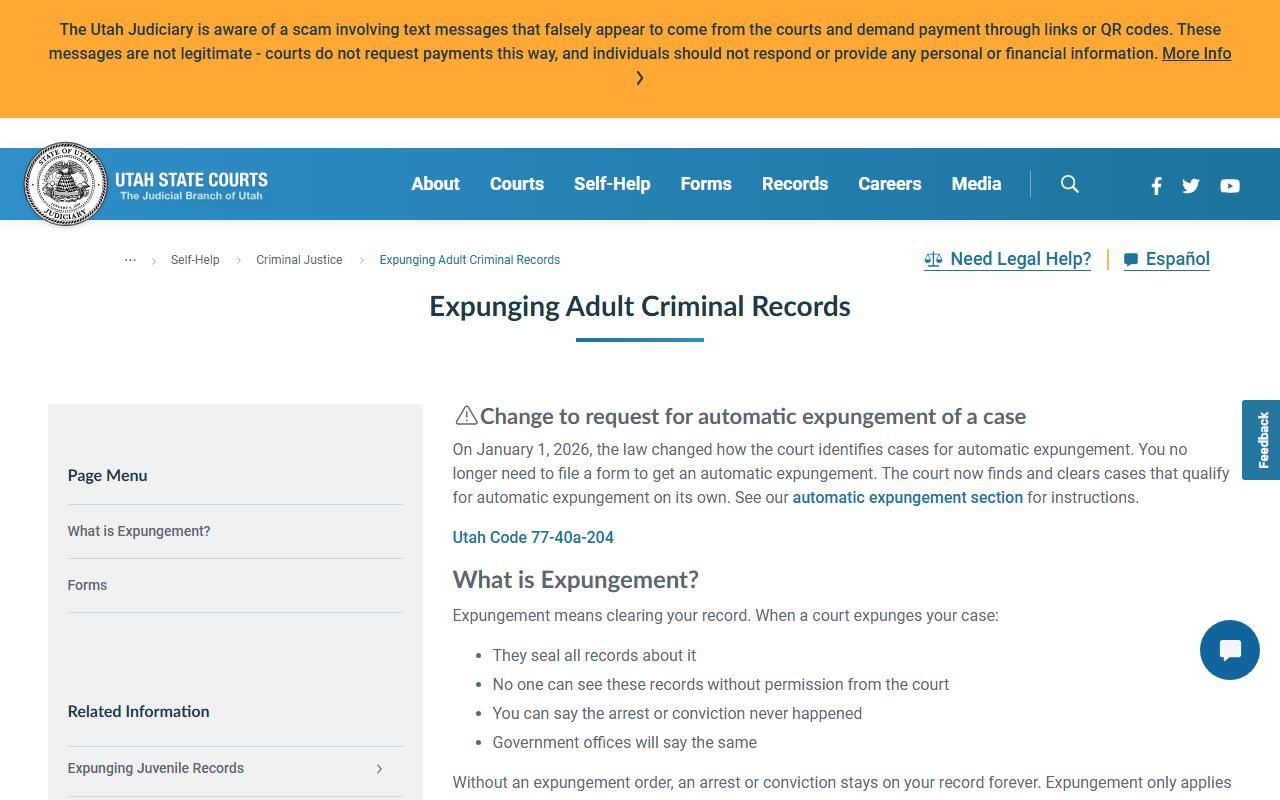
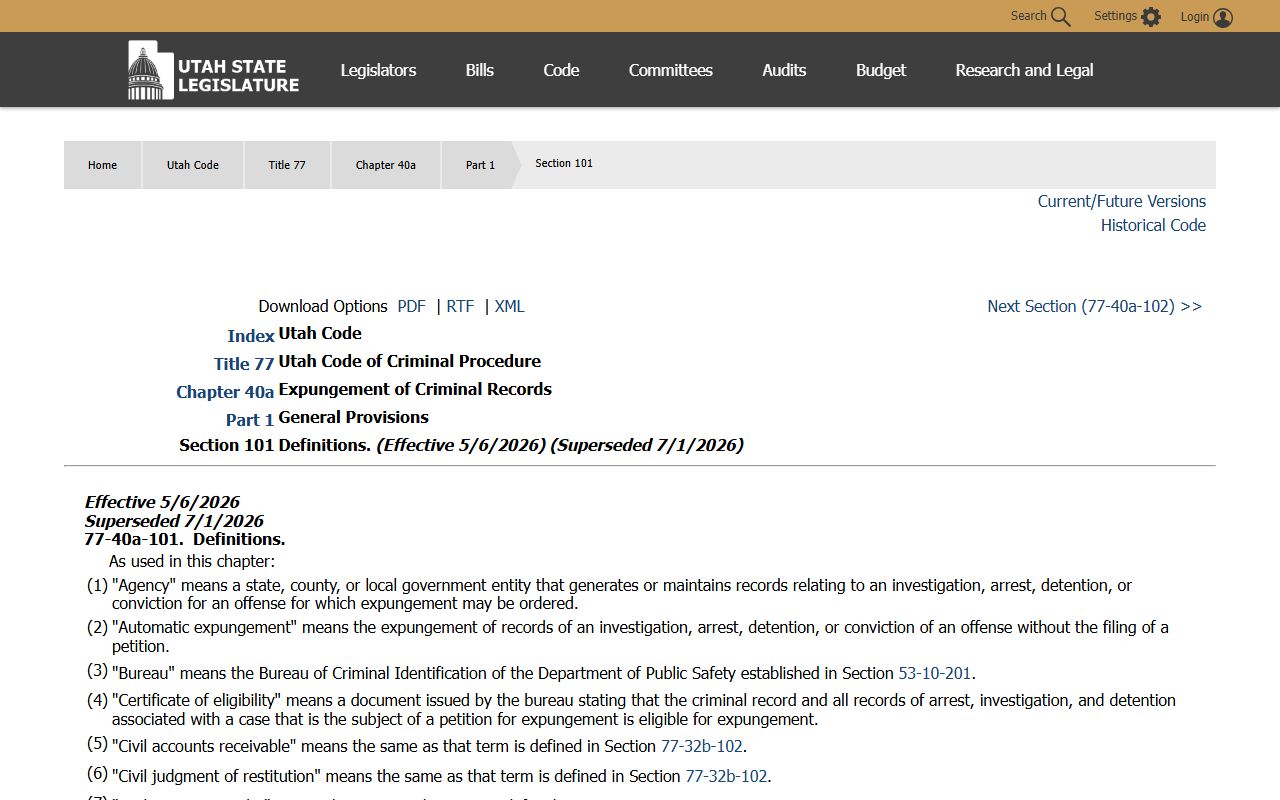
The legal terms behind expungement are defined by statute. Utah Code § 77-40a-101 defines expungement, automatic expungement, and the certificate of eligibility.
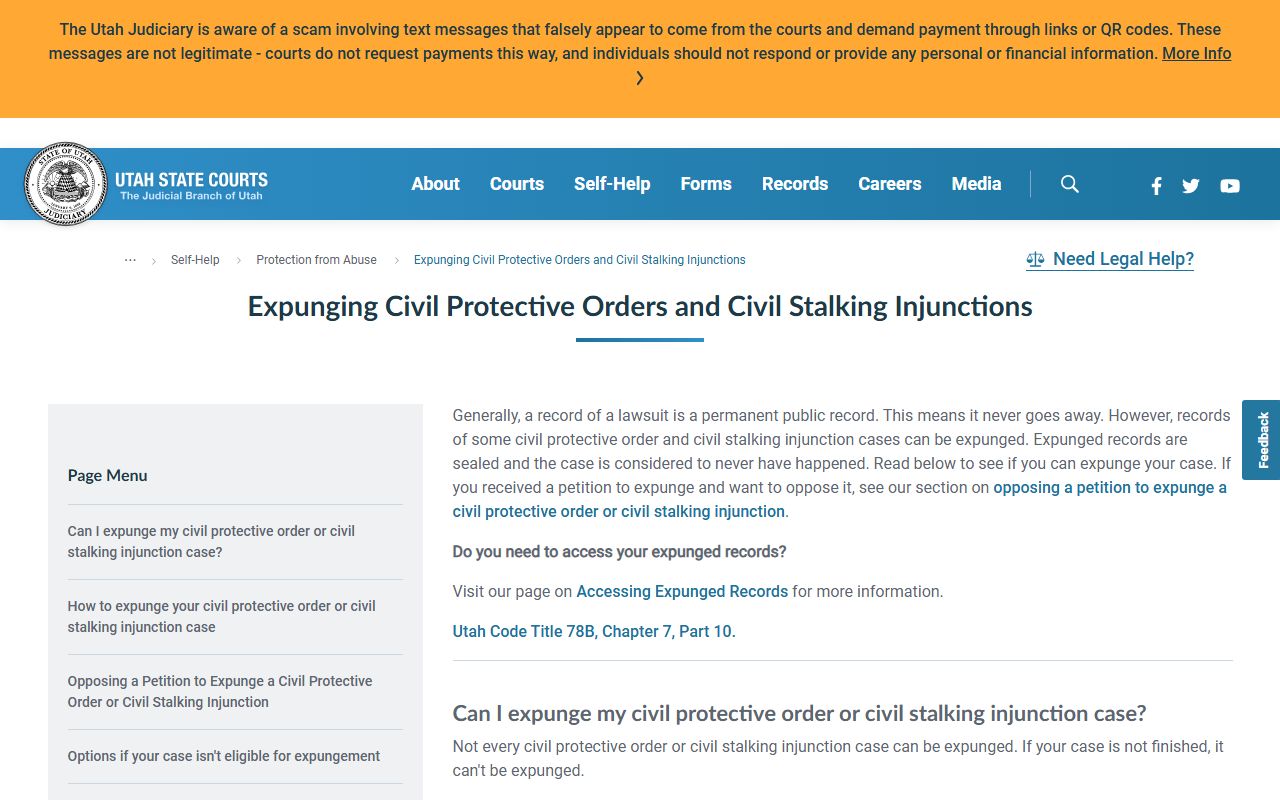
Protective order and civil stalking records have their own expungement path. The protective order expungement page covers that process.
Sealed vs. Expunged Records
People use these words loosely, but they differ. A sealed record is hidden from public view by statute, rule, or court order, yet it still exists. An expunged record is treated as though it never happened, and access requires court permission. Both block the general public, but expungement goes further.
| Sealed | Expunged | |
|---|---|---|
| Visibility | Hidden from public | Treated as if it never existed |
| Law Enforcement | Limited access | Very limited access |
| Eligibility | By statute, rule, or order | Petition or automatic under Utah Code 77-40a |
Common reasons an expungement is denied include an ineligible offense, unpaid fines or restitution, too short a waiting period, or a pending case.
Background Check Considerations
A casual roster search and a regulated background check are not the same. A regulated check, run for employment, housing, or credit, must follow the federal Fair Credit Reporting Act and state law. An informal lookup of a public arrest record carries no such legal weight and should never drive a hiring or rental decision.
Important: This site is not a consumer reporting agency under the FCRA, and its data may not be used for employment, tenant, credit, or insurance screening.
Restricted Criminal Records in Davis County
Some criminal records are closed to the public. Juvenile delinquency cases are handled by the Juvenile Court and are tightly limited. Sealed and expunged cases do not show on Xchange. Records of an ongoing investigation may be withheld, and booking photos are protected. For active warrants, which are often public court records, see the warrant records page.
How do I find a recent arrest in Davis County? Start with the Davis County Sheriff's inmate roster, which updates every 15 minutes and lists current bookings by name. If the person was charged, search the name on Xchange for the court case. If you cannot confirm custody, call Corrections at 801-451-4200. The roster is informational, so treat it as a starting point rather than a final, certified answer.