
Utah's Government Records Access and Management Act
Utah's open-records framework is the Government Records Access and Management Act, known as GRAMA. The act applies to county and state agency records, including the Davis County Sheriff, Davis County Clerk, Recorder, Attorney, and Health Department. Court files are governed by separate judicial branch rules and not by GRAMA.
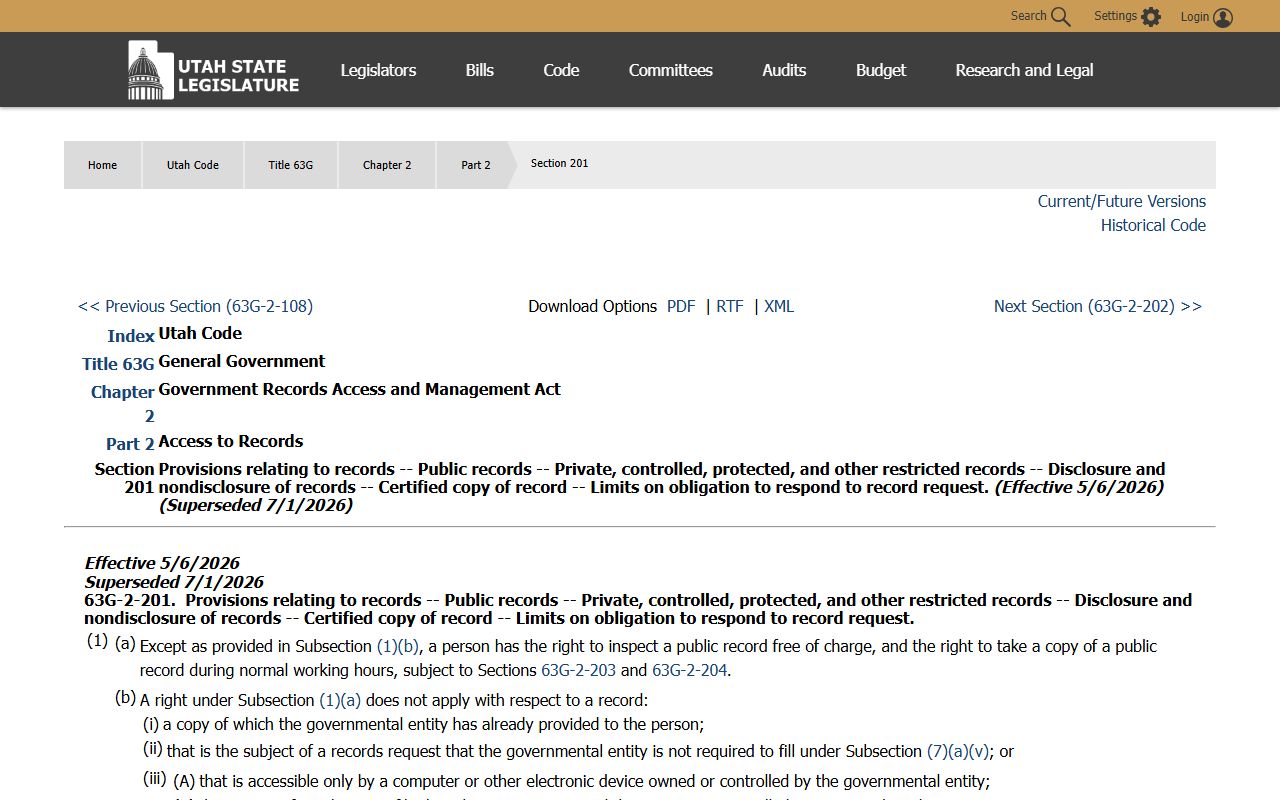
The core right comes from Utah Code § 63G-2-201. It gives the public the right to inspect public records and obtain copies during normal working hours, subject to fees and procedures, and says electronic form cannot be used to unreasonably hinder access.
Anyone can request a public record. There is no residency rule, and the requester does not need a stated reason. Some categories are private, controlled, or protected by other law, which a later section explains.
GRAMA classifies each record before it is released. A "public" record can be inspected on request. A "private" record protects personal information of an individual. A "controlled" record is medical or psychological. A "protected" record covers things like trade secrets or security plans. Some records are mixed, so a Davis County agency may release a redacted public version.
What Davis County Records Are Available
Davis County offices keep a long list of public records. The Davis County Clerk handles elections, public meetings, marriage licenses, passports, and county code access. The Recorder keeps recorded land documents. The Sheriff keeps law-enforcement and corrections records, subject to legal limits. The Health Department keeps vital records for a defined window. The county directory and the Learn About Us page describe what each office holds.
- Real-property deeds, plats, liens, mortgages, and military discharges from the Davis County Recorder.
- Marriage licenses, election records, public meeting minutes, and county code from the Davis County Clerk.
- Crash reports, incident reports, and limited inmate data from the Davis County Sheriff.
- Marriage and divorce certificates from the Davis County Health Department for the 1978 to 2010 window.
- County budgets, claims, and contracts from the Clerk/Auditor's financial role.
Court case files do not run through this list. Those go through Utah Courts Xchange or the District Court that filed the case, as the Davis County court records page explains.
Some Davis County data also sits in online apps rather than on paper. Property Search, Property Watch, the GIS Map Portal, and the Sheriff's Dashboard publish live data without a formal GRAMA request. When the data is already public on a county app, a request may not be needed at all.
How to File a Davis County Public Records Request
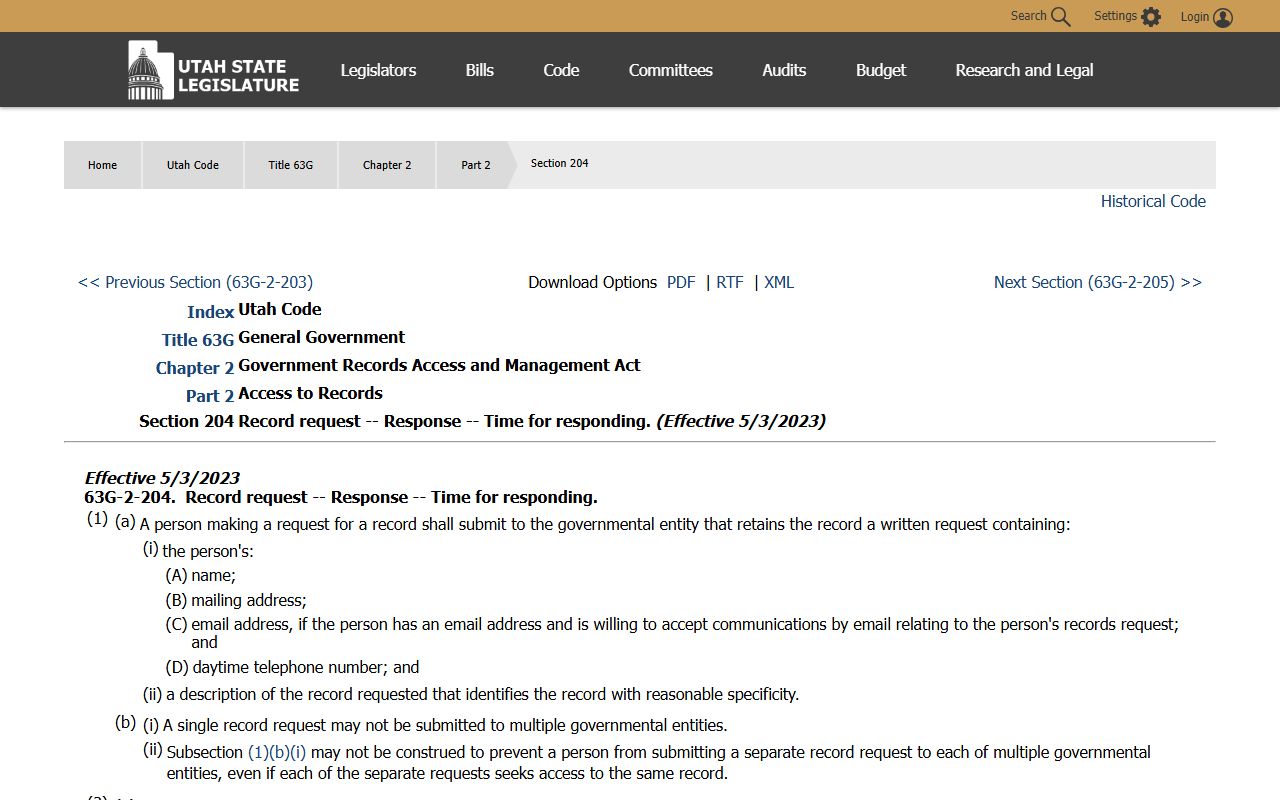
GRAMA requires a written request. Utah Code § 63G-2-204 sets out what to include and the response deadlines, and lays out the difference between standard and expedited public-benefit requests.
- Identify the office that holds the record, since each agency processes its own requests.
- Write the request with your name, mailing address, email if willing, daytime phone, and a reasonably specific description.
- Submit by mail, email, or any portal the office provides, and keep a copy of what you sent.
- Wait for the response, which is generally up to 10 business days, or 5 for qualifying expedited public-benefit requests.
- Pay any fee and receive the records, or follow the appeal path if the request is denied.
Public Records Request Form Fields
Most Davis County agencies use the same basic GRAMA form. The fields below come from the statute and from typical agency request forms.
| Field | Required | Notes |
|---|---|---|
| Requester Name | Yes | Per Utah Code 63G-2-204 |
| Mailing Address | Yes | For written response and any mailed records |
| If willing | Helps speed delivery of electronic records | |
| Daytime Phone | Yes | For quick clarification by staff |
| Description of Records | Yes | Reasonably specific by topic, date, or person |
| Date Range | No | Speeds the search and lowers cost |
| Expedited Request | No | Allowed for qualifying public-benefit requests |
| Fee Waiver Request | No | Possible when in the public interest |
Response Timelines Under GRAMA
Standard GRAMA requests get a response as soon as reasonably possible, but no later than 10 business days. Qualifying expedited public-benefit requests get 5 business days. The statute also allows extra time for "extraordinary circumstances," which include voluminous requests, an agency needing to review records carefully, or compliance with a court order.
If the deadline passes with no response, treat the request as denied for purposes of appeal. Always note the date you sent the request and the date of any reply, since the timeline is the spine of any appeal.
Agencies sometimes call or email to narrow a request. A short reply that confirms the date range, the document types, and the persons involved can shave hours off the response. A well-scoped request also tends to cost less, since GRAMA fees follow actual staff time and copying.
Davis County GRAMA Fees
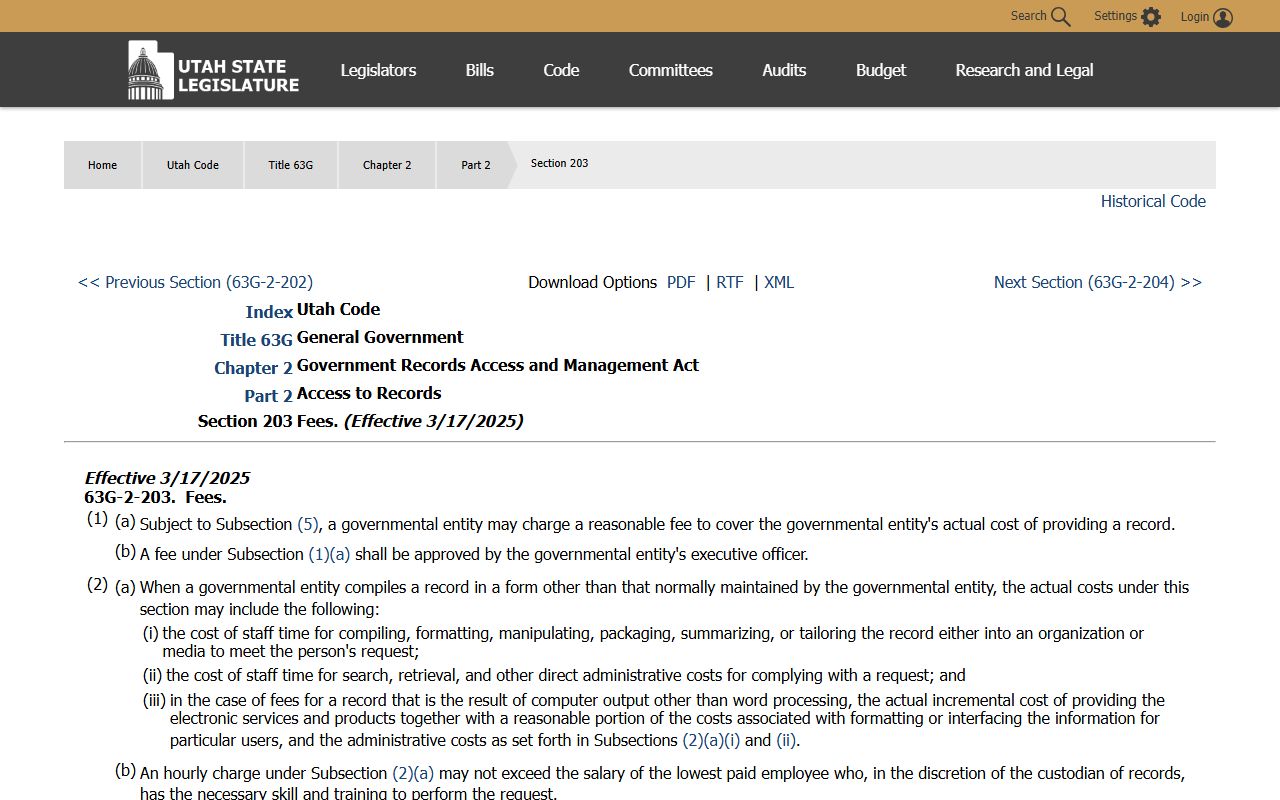
GRAMA lets agencies charge reasonable fees that cover actual costs, with rules for staff time and copying. The structure is set by Utah Code § 63G-2-203, and each Davis County office applies it under its own published schedule.
Specific charges vary by office. Sample published Davis County rates include:
| Item | Amount |
|---|---|
| Justice Court photocopy | $0.25 per page |
| Justice Court certified copy | $4.00 per document plus $0.50 per page |
| Justice Court fax or email records | $5.00 for 10 pages or less, $0.50 per additional page |
| Health Department certificate search plus 1 copy | $18.00 |
| Agency search labor | Reasonable fee under GRAMA, per office |
Fee waivers may be possible when the records benefit the public rather than the requester alone. Ask in writing and explain the public benefit when you submit.
Records That Are Exempt or Restricted
Not every county record is public. GRAMA classifies some records as private, controlled, or protected. Examples of restricted Davis County records include sealed and expunged court files, juvenile delinquency cases, adoption records, medical and mental health records, and booking photos.
The booking-photo rule is local and statutory. The Davis County inmate detail page cites Utah Code § 17-22-30 for the rule that inmate photos can no longer be provided on the website, and booking photos are protected records under GRAMA. Court records have their own carve-outs under UCJA Rule 4-202.02.
Other common limits include active investigation files held by the Sheriff or the County Attorney, certain personnel data of public employees, attorney work product, and victim impact information. The county does not pick and choose at will: each category points to a statute or rule that classifies the record.
If a Davis County GRAMA Request Is Denied
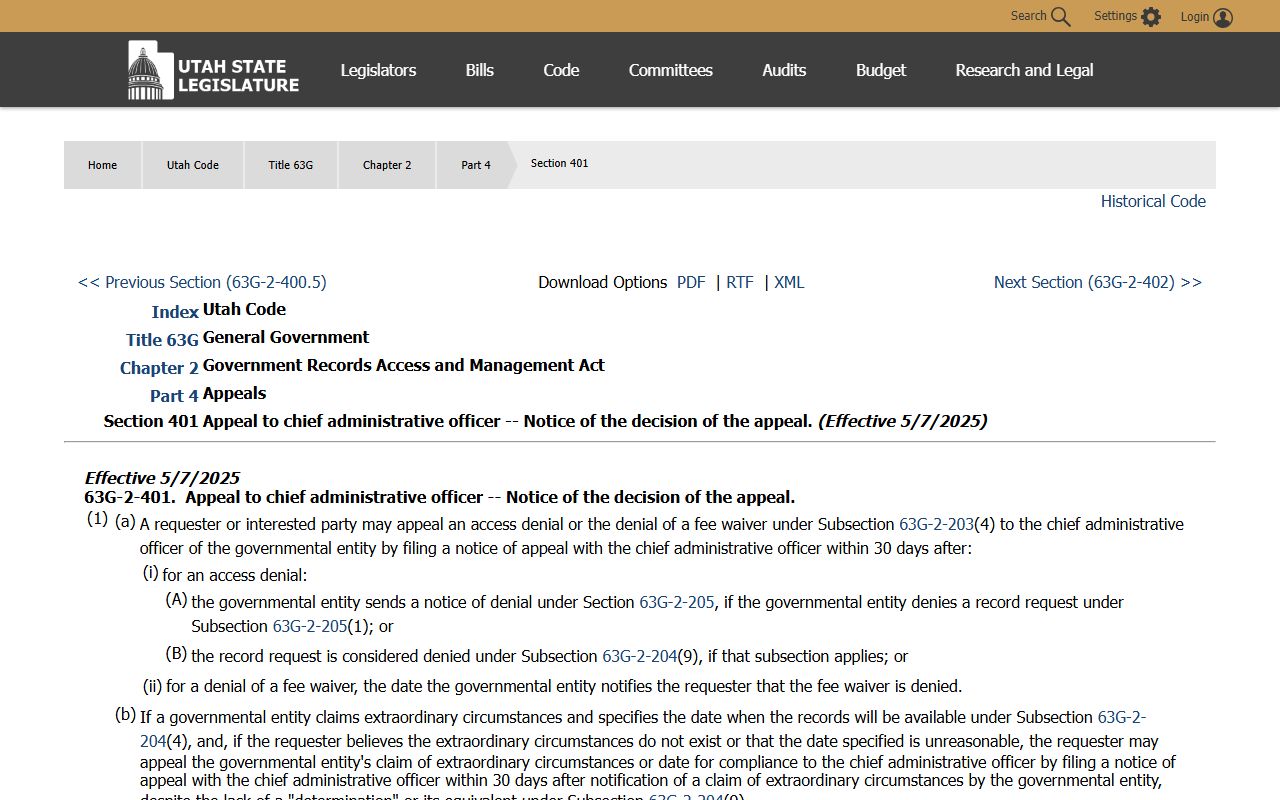
GRAMA gives the requester an appeal path. The first step is an appeal to the chief administrative officer of the agency under Utah Code § 63G-2-401. The chief administrative officer reviews the denial and decides whether to release the record.
After the agency-level appeal, GRAMA provides for further review through the State Records Committee or, in some cases, the courts. Keep all written correspondence in one file, since appeals turn on the dates and the language of each notice.
A denied request is not always a closed door. Sometimes an agency partially releases a record with names or other private details redacted. Sometimes the records are simply with another office, which a quick call to the county directory can clear up. Patience and clear paperwork tend to win out over heated demands.