Davis County District Court Overview
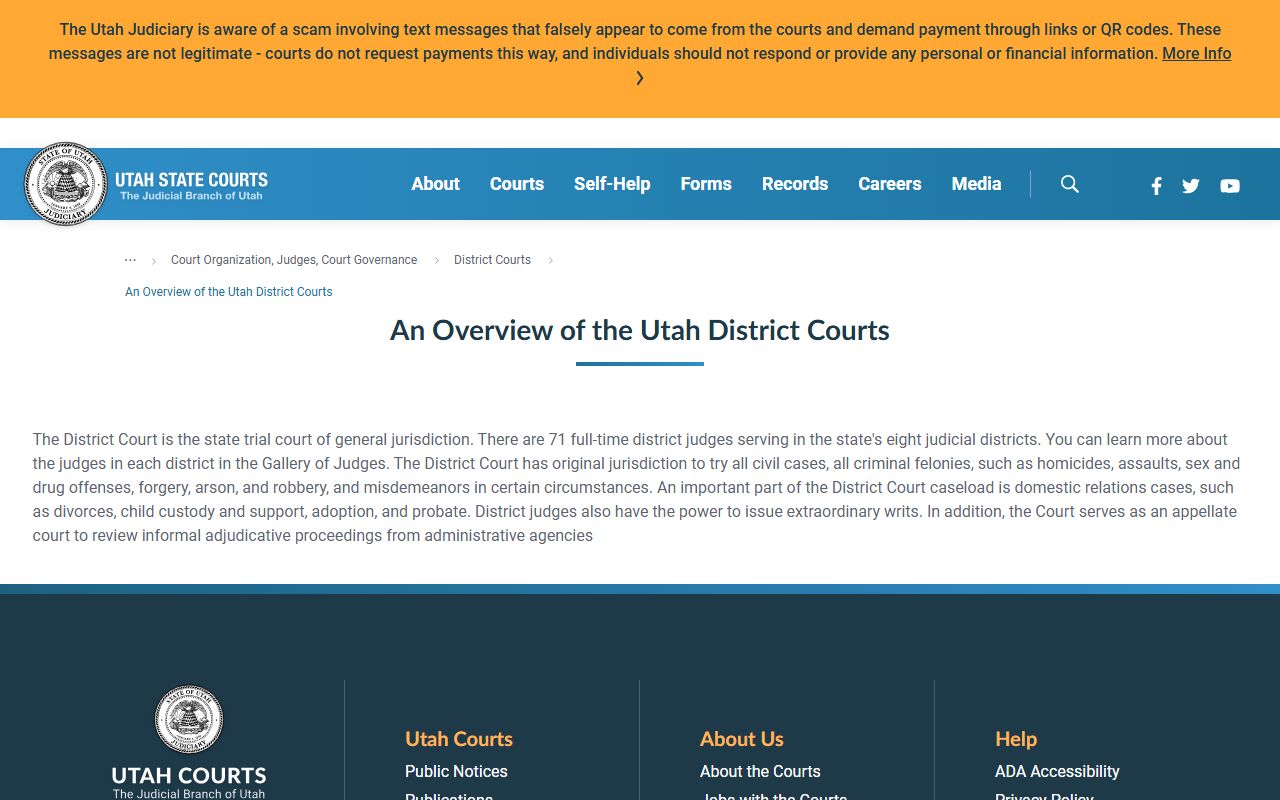
Utah's District Court is the trial court of general jurisdiction. The Utah Courts overview describes it as the court that handles civil cases, felony criminal cases, class A misdemeanors, domestic relations, adoption, probate, and some administrative appeals. In Davis County, the District Court is the main forum for any case that is too large or too serious for the local Justice Courts.
The official Utah District Court overview covers jurisdiction in detail.
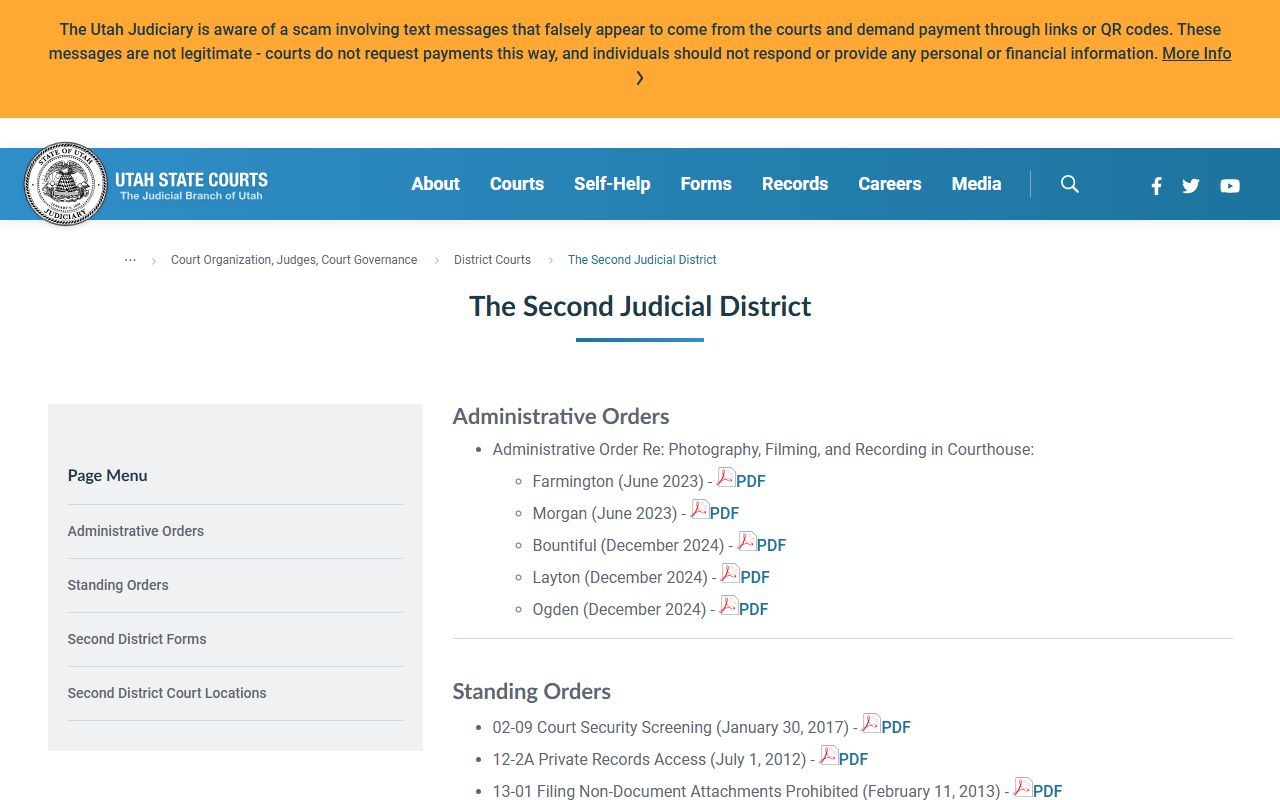
Davis County is part of the Second Judicial District, grouped with Morgan and Weber Counties. The district publishes administrative orders, standing orders, and forms that apply across the three counties. Davis cases land at one of the county's three District Court sites depending on where the case is filed.
Davis County District Court Locations
The Davis County District Court runs out of three buildings. All three share the same email and report to the Second District. The Second Judicial District page publishes locations, judges, and standing orders.
| Location | Address | Phone | Notes |
|---|---|---|---|
| Farmington District Court | 800 West State Street, Farmington, UT 84025 | 801-447-3800 | Main Davis County District Court site at the State Street complex |
| Bountiful District Court | 805 South Main Street, Bountiful, UT 84010 | 801-397-7000 | South-county Davis District Court |
| Layton District Court | 425 Wasatch Drive, Layton, UT 84041 | 801-444-4300 | North-county Davis District Court |
All three locations use the email 2davisd@utcourts.gov, and the Farmington jury clerk is at 801-447-3820. District Judge Jennifer L. Valencia is assigned to the Farmington courthouse and is also a statewide Water Judge.
District Court vs. Juvenile Court vs. Justice Court
Utah does not run a county-level "county court" the way some other states do. Instead the trial level is split between District, Juvenile, and Justice Courts. Each one hears its own slice of cases, and each one feeds different appeals paths.
| District Court | Juvenile Court | Justice Court | |
|---|---|---|---|
| Civil Scope | General civil, including divorce, custody, probate | Child welfare and dependency | Small claims up to the state cap |
| Criminal Scope | Felonies and class A misdemeanors | Delinquency for youth under 18 | Class B and C misdemeanors, infractions |
| Family Cases | Yes | Abuse, neglect, termination of parental rights | No |
| Appeals To | Utah Court of Appeals or Supreme Court | Utah Court of Appeals | District Court for trial de novo |
A Davis County divorce belongs in District Court. A Davis County county traffic ticket usually belongs in Justice Court. A juvenile delinquency case belongs in Juvenile Court. The case type drives the venue.
How a Case Moves Through the Davis County System
A criminal case starts with an arrest by the Sheriff or a city police department. The case then runs through the prosecutor's review, charging, court appearances, and disposition. A civil case starts when a party files a petition or complaint in District Court. The flow lines below summarize the standard path for each.
Criminal flow: Arrest › First Appearance › Information or Indictment › Arraignment › Pretrial › Trial › Sentencing › Appeal
Civil flow: Petition Filed › Answer › Discovery › Mediation › Trial › Judgment › Appeal
Many Davis County criminal cases also pass through specialty courts, such as the county Drug Court or Mental Health Court, where the County Attorney's office coordinates treatment-focused tracks.
Civil, Family, and Criminal Cases at District Court
Davis County District Court does not divide cases by formal "division" labels in the way some states do. The same court hears civil suits, felony criminal cases, family law, and probate. The case type is set by the filing, and the court assigns a judge based on rotation and case management rules.
Civil cases in Davis County District Court include personal injury, contract disputes, debt collection, real-property cases, and administrative appeals. Family cases include divorce, custody, child support, paternity, protective orders, and cohabitant abuse. Probate covers wills, estates, guardianships, and conservatorships. Criminal cases handle Utah felonies and class A misdemeanors.
Public access to these files runs through Utah Courts Xchange for summary case data and document images filed since July 1, 2010. Many family documents are private under UCJA Rule 4-202.02, while case history, hearings, judgments, and orders may stay public. Adoption, civil commitment, and juvenile cases are not on Xchange at all.
Second District Juvenile Court for Davis County
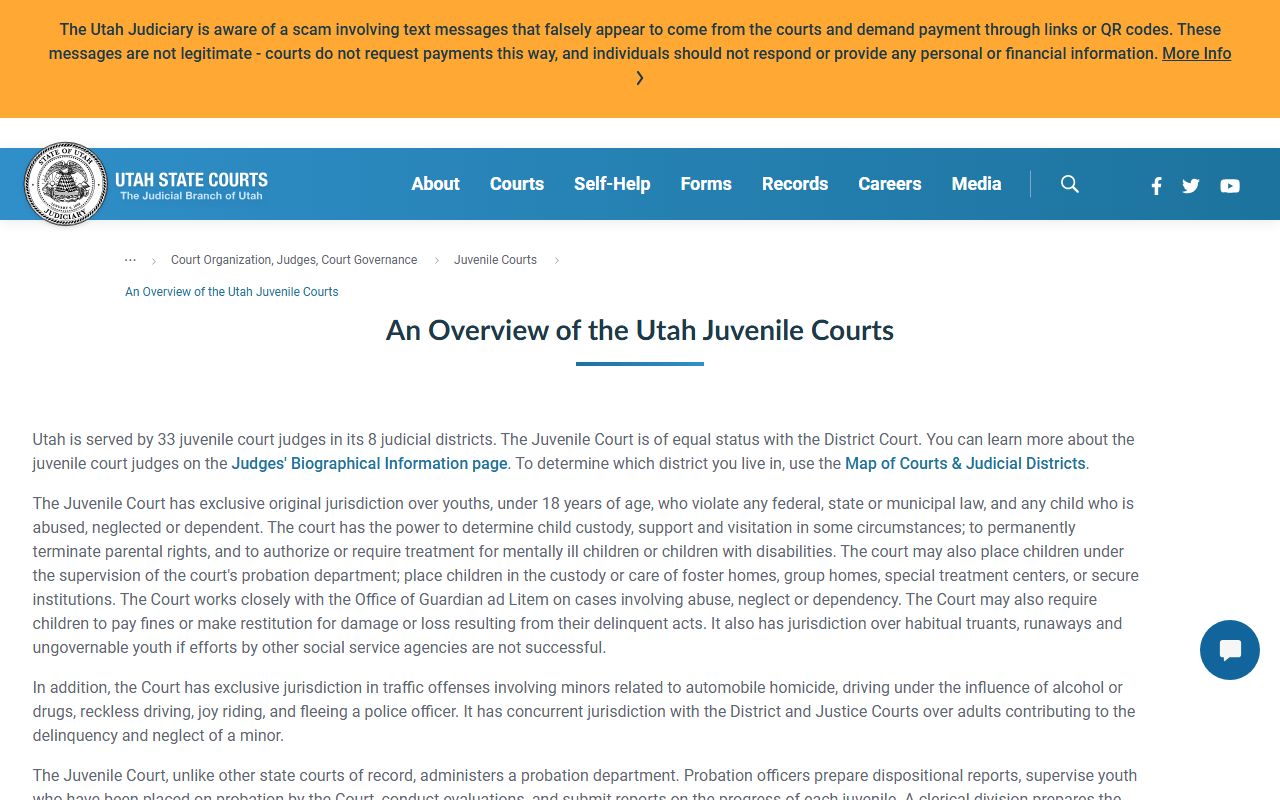
The Juvenile Court is not below the District Court. Utah Courts says the Juvenile Court is equal in status to District Court, but with a different focus. It handles youth under 18, child welfare, delinquency, child abuse and neglect, and termination of parental rights.
The Utah Juvenile Court overview covers the kinds of cases the Juvenile Court hears.
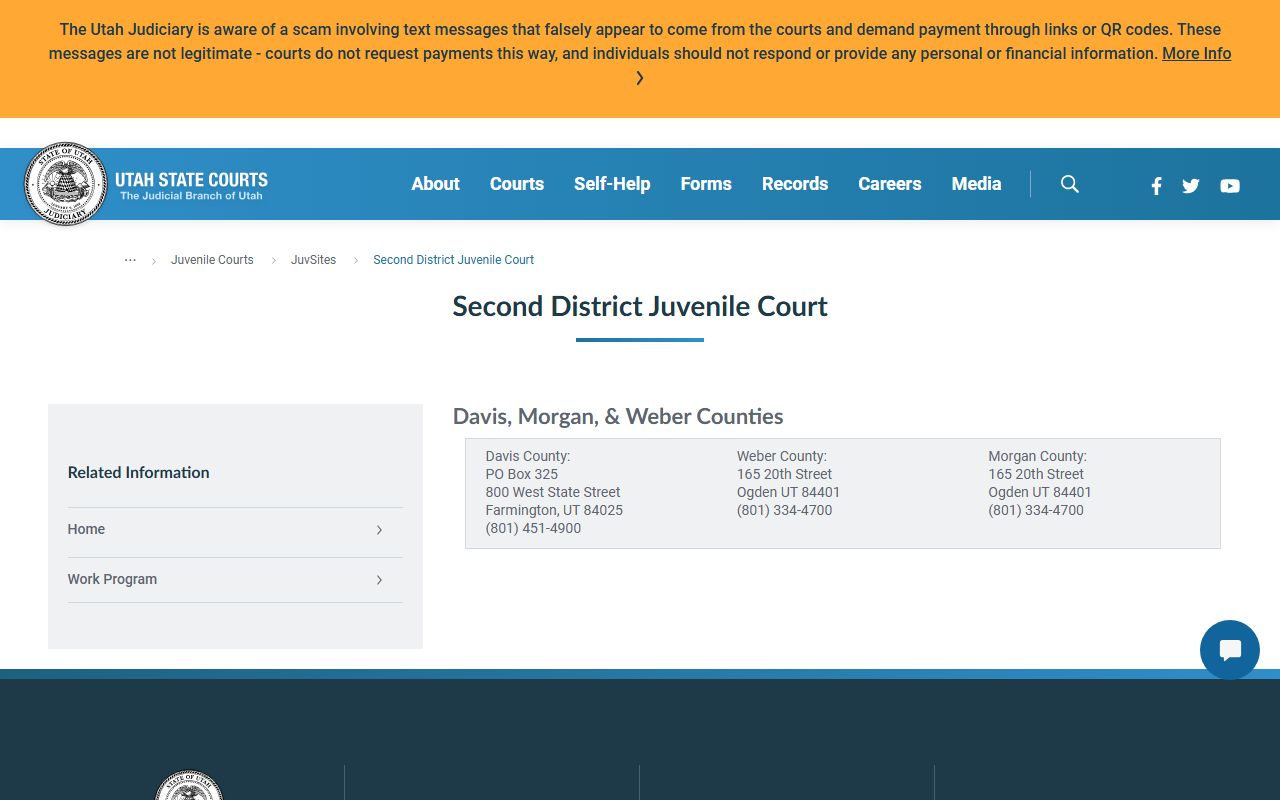
For Davis County, the Second District Juvenile Court sits at the State Street complex in Farmington. The contact is PO Box 325, 800 West State Street, Farmington, UT 84025, phone 801-451-4900. Most juvenile records do not show on the public case search, and access is tightly limited.
Judicial District and Standing Orders
Davis County's place in the Second Judicial District matters in practice. The district publishes standing orders that apply across cases, including a court security screening standing order, rules for private records access, rules for non-document attachments, and orders on medical release of incarcerated individuals. Administrative orders cover photography, filming, and recording inside the Farmington courthouse from June 2023, with similar orders for Bountiful and Layton from December 2024.
People who plan to attend a Davis County District Court hearing should expect security screening at entry. The court does not allow weapons or prohibited recording equipment. The county directory lists current office hours for general business.
Magistrate Function and the Justice Courts
Utah's lower trial level is the Justice Court system. The Davis County Justice Court hears class B and C misdemeanors, infractions, ordinance violations, small claims, and many traffic matters. Several cities in the county run their own justice courts: Centerville, Clearfield, Clinton, North Salt Lake, South Weber, Sunset, Syracuse, and Woods Cross.
The magistrate function in Utah covers things like signing arrest warrants and search warrants on probable cause. District Court judges and many Justice Court judges act as magistrates when needed. Judge J.C. Ynchausti serves as the Davis County Justice Court judge, with a background as a Bountiful Assistant City Attorney and a long record in civil commitment matters.
Appeals from a Justice Court conviction go to the District Court for a trial de novo, not to the Court of Appeals. That makes the District Court the next stop for many traffic and minor criminal appeals, even when the original case never crossed the State Street complex. A trial de novo means the case is heard fresh, with new evidence and a new ruling, rather than reviewing the lower court for legal error.
Appeals from Davis County District Court
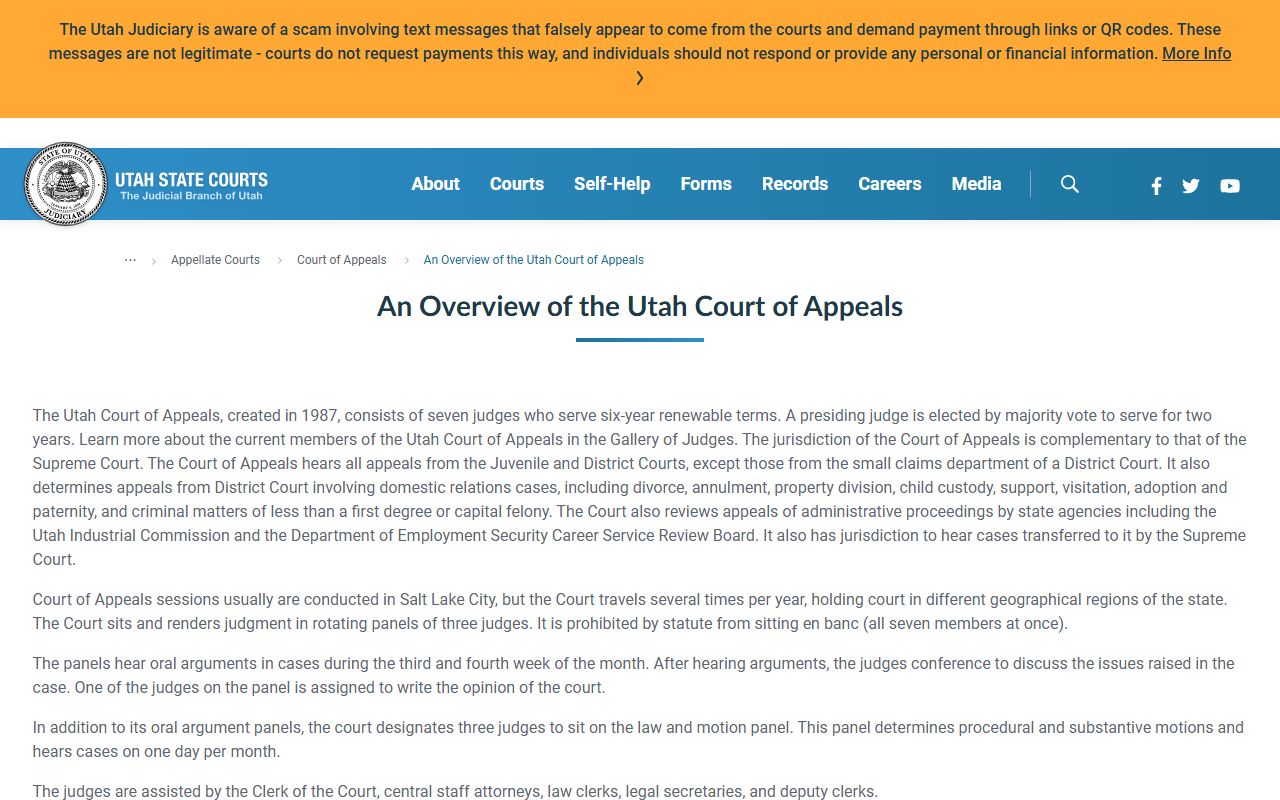
Appeals from the Davis County District Court go to one of Utah's two appellate courts. The Utah Court of Appeals is the intermediate court and hears most domestic, juvenile, and criminal appeals. The Utah Supreme Court is the court of last resort and has direct jurisdiction over first-degree and capital felony convictions and key constitutional matters.
The Utah Court of Appeals overview covers the intermediate court's caseload and jurisdiction.
The Utah Supreme Court overview lays out the court of last resort and its direct jurisdiction.